Aime Aguilar
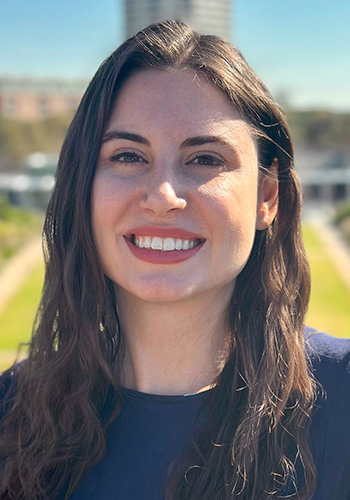
Kathleen Bradbury
Biosketch Kathleen Bradbury graduated in 2019 from Rice University with a Bachelor of Arts degree in Cognitive Sciences, minoring in Neuroscience, with a Distinction in Research and Creative Work. After graduating, she worked as a research assistant at the Nantz National Alzheimer Center at Houston Methodist Hospital, focusing on neuropsychological testing and neuroimaging in patients with primary progressive aphasia. Kathleen’s research interests include determining neurological, linguistic, and cognitive measures that predict aphasia recovery, with the goal of improving patients' functional outcomes. Outside of work, she enjoys board games, sports, and spending time with friends, family, and her dog, Soda Pop.
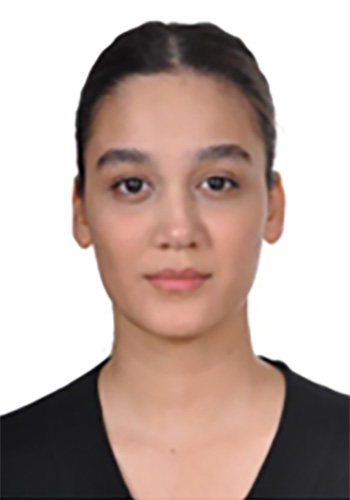
Mahdis Dadfar
Biosketch I am a Ph.D. student in Kinesiology, focusing on motor behavior at the University of Houston. I hold an M.Sc. in Sports Pathology and Corrective Exercises and a B.Sc. in Exercise Sciences with a specialization in Athletic Coaching. My research journey began with a fascination for biomechanics which evolved during my PhD studies, leading me to explore the neural mechanisms critical for balance. I use a variety of tools such as EEG, 3-D motion analysis, EMG, and TMS. In addition to this, I am interested in developing therapeutic interventions aimed at improving sensorimotor capabilities in elderly and stroke patients.
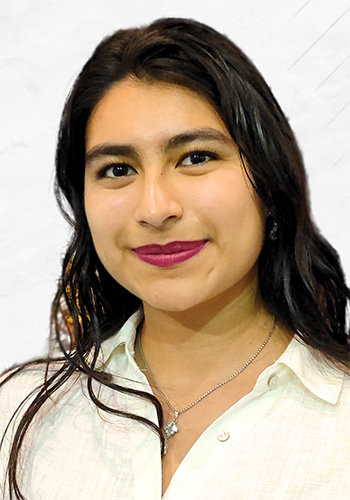
Dacia Martinez Diaz
Biosketch Dacia Martinez Diaz is a PhD student in Kinesiology at the University of Houston, currently working on the analysis of kinematics data from patients with neurodevelopmental disorders such as NGLY1 deficiency, Rett syndrome, and SYNGAP1-ID. She earned her bachelor's degree in Biomedical Engineering from Tecnologico de Monterrey, where she actively engaged in undergrad research projects within the biomechanics field.
Elena Grassi, Ph.D.
Kyoungsoon Kim
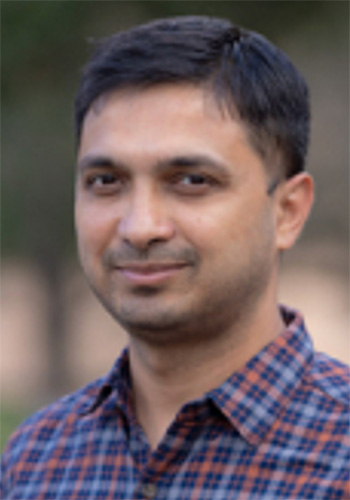
Komal Kukkar
Biosketch Komal Kukkar is originally from Abohar, India and is currently based in Houston, Texas. He received his bachelor’s in physical therapy in 2007, MS in Kinesiology (Major-Biomechanics and Motor Control) from University of Illinois at Chicago in 2013 and MS in Data Science from Maryville University at St. Louis in 2021. He worked as a Physical Therapist for 8 years in New York City rehabilitating kids with Autism as well as stroke patients. In addition, he started teaching physical therapy students as well as conducting research on Autism in 2015. With continued interest in motor control research and machine learning, he joined the University of Houston doctoral program in Kinesiology in August 2021 under the advisory of Dr. Pranav Parikh. In addition to the full funding, he is a recipient of the Presidential Fellowship. His main research interests include Stroke fall risk prevention, Neuromechanics and Motor Control, Machine Learning and Predictive Modeling.
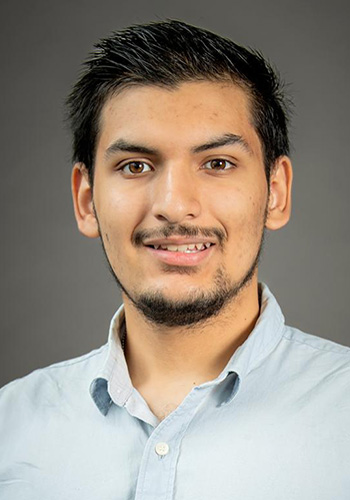
Yoshua Lima-Carmona
Biosketch Yoshua E. Lima-Carmona is a Biomedical Engineer from Tec de Monterrey (Mexico), where he had the opportunity to develop professionally by working as an Undergrad Research Assistant and as a Program Manager of the Advanced Learner Assistance System (ALAS) research project.
His experience also includes a full-time professional research internship in the Noninvasive Brain Machine Interface Systems Lab at the University of Houston, where he improved his research laboratory skills and learned about the good practices in Biomedical Engineering focused on the field of Neuroengineering by working on the Brain on Acting (BoA) project, which seeks to understand the neural basis of acting. Additionally, he participated as presenter of the BoA project at the Society for Neuroscience Annual Meeting 2023 in Washington DC.
As part of his contributions, they extend to publications that illuminate the evolving landscape of biomedical research, including works such as “Evolution, applications and trends in the merging of BMI and IoT technologies: a Review”, ”Data descriptor: Mobile brain-body imaging and audio-visual data of theatrical actors during rehearsal and performance”, “Wearable Biosensor Technology in Education: a Review”, “An EEG Dataset of Subject Pairs During Collaboration and Competition Tasks in Face-to-face and Online Modalities”, “Shared neural dynamics of actor-actor dyads during an acted scene”. These publications underscore his commitment to advancing knowledge at the intersection of technology and neuroscience.
Currently, he’s working as a Research Assistant at the Noninvasive Brain Machine Interface Systems Lab at University of Houston, while he seeks to start his PhD studies in Electrical Engineering during the Fall-2024.
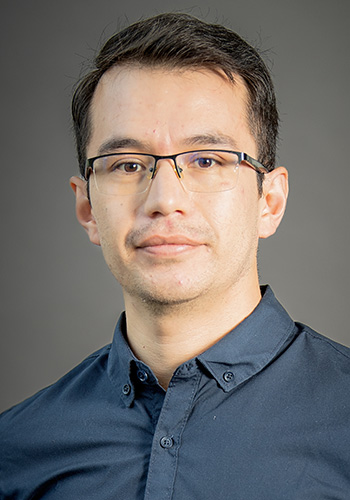
Josué Pacheco-Chérrez, Ph.D., postdoctoral researcher mentor
Biosketch Dr. Josué Pacheco-Chérrez is a postdoctoral researcher at the Laboratory for Noninvasive Brain-Machine Interface Systems at the University of Houston’s NSF-funded IUCRC BRAIN Center–an industry-university partnership to develop neurotechnologies to improve the human condition.
Dr. Josué Pacheco-Chérrez received his Ph.D. in Engineering Sciences from the Tecnológico de Monterrey in 2023. During his doctoral studies, he conducted international research stays at the University of Oviedo (Spain) from June to December 2022, enriching his experience and perspectives in the field.
Prior to their Ph.D., Dr. Josué Pacheco-Chérrez obtained a Master of Science degree in Engineering Sciences from the Tecnológico de Monterrey in 2019. He completed his undergraduate studies in Electronics and Telecommunications Engineering at the University of Cuenca, Ecuador, graduating in 2017.
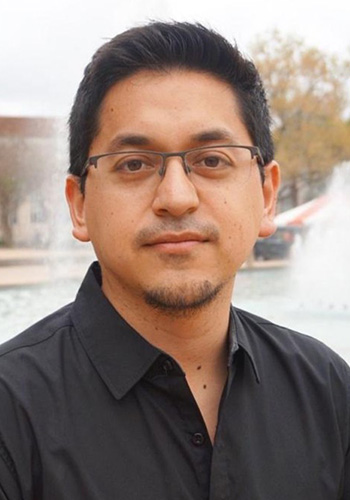
Manuel Portilla-Jimenez
Biosketch Manuel from Quito, Ecuador, joined the lab in September 2020. Also, he worked as a lab technician in the Department of Kinesiology at Temple University. He did his MSc in Bioengineering at Temple University, Philadelphia, and BS in mechatronics at the Equinox University of Technology, Quito, Ecuador. The following list shows his research interests: 1) Neurorehabilitation, 2) Multivariable analysis methods for processing information, and 3) Neural mechanisms of motor coordination. His hobbies are programming and cooking.
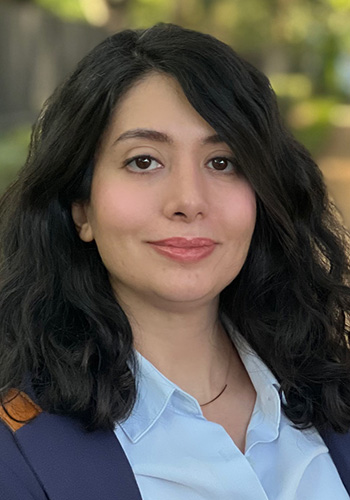
Saba Yazdekhasti
Biosketch Saba Yazdekhasti is currently pursuing her Ph.D. in Kinesiology, specializing in Motor Behavior. Her master’s studies and work experience in Orthotics and Prosthetics have given her a solid foundation for her current research. After serving as a teaching assistant for the Biomechanics course, her research work also extends to interactions between the nervous system and the musculoskeletal system. Her work reflects a deep understanding of the complexities involved in optimizing human performance in several aspects such as sensorimotor function, development of biomechanics within the field of sport science, and human locomotion.
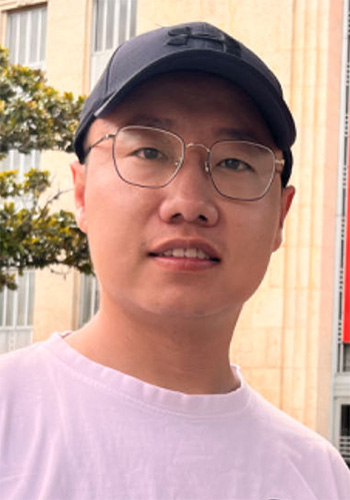
Hong Zhong
Biosketch Mr. Hong Zhong is currently a Ph.D. candidate in the Department of Electronic and Computer Engineering Chemistry under the supervision of Professor Jiming Bao. His research focuses on the time-domain thermoreflectance (TDTR) for thermal property characterization of semiconductors and triboelectric generators for energy harvesting applications.