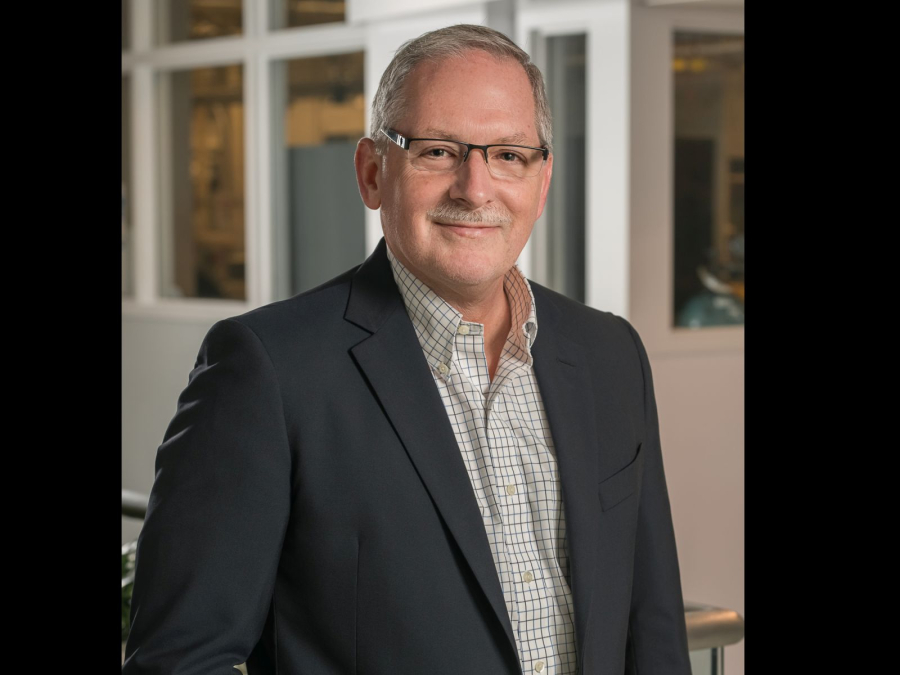
For Steven F. Stanley, the importance of the doctorate he earned at the University of Houston and its effect on his career goals can’t be overstated. It’s partly because of this transformative effect that he has given back to the Chemical and Biomolecular Engineering Department at the Cullen College of Engineering in the ensuing decades after earning his degree.
“The knowledge, mentorship, and opportunities I gained as a Ph.D. student allowed me to progress from research roles to leading companies across the global chemical industry,” he said. “My success would not have been possible without the support of faculty, staff, and peers at UH, and I feel a responsibility to ensure future generations have access to the same transformative experience.”
Stanley came to UH after earning his B.S. in Chemical Engineering from the University of Minnesota. Given Houston’s reputation as the center of the U.S. petrochemical industry, it was on Stanley’s radar when it came to earning his Ph.D.
“The University of Houston stood out not only for its national ranking in chemical engineering but also for its excellence in my areas of greatest interest — chemical reaction engineering and catalysis,” he said. “During my due diligence, I discovered a remarkable connection between UH and UMN through several faculty members who had academic roots at Minnesota. Most notably, Professor Neal Amundson — the renowned member of the National Academy of Sciences and widely recognized for his groundbreaking contributions — founded the University of Minnesota’s Chemical Engineering Department, where the building proudly bears his name.”
The field of engineering was one that Stanley grew up immersed in. His father was a civil engineer for the Minnesota Department of Transportation.
“His example instilled in me both a respect for the discipline and an appreciation for the impact that engineers can have on society,” Stanley said. “Throughout high school I excelled in STEM subjects, and when a career advisor suggested chemical engineering — describing it simply as a field that involved ‘a lot of math and science’ — I was intrigued and quickly became hooked.”
“At the University of Minnesota, I was fortunate to work under Professor Klavs Jensen in his chemical engineering research group during my junior and senior years. This undergraduate research opportunity was transformative, giving me first-hand exposure to problem-solving at the interface of science and engineering. Professor Jensen’s mentorship was equally influential, as he encouraged me to pursue doctoral studies — guidance that proved foundational to my professional journey.”
Stanley said his arrival at UH allowed him to discover a “deeply collaborative academic environment” that helped him develop his skills even further.
“My doctoral advisor, Professor James Richardson, provided both rigorous technical guidance and unwavering support, shaping my ability to think critically and independently,” he said. “I was also fortunate to learn from Professor Amundson, a pioneering figure in modern chemical engineering, whose intellectual legacy had a profound influence on the department. In addition, Professor Dan Luss, then serving as Department Head and himself a former Ph.D. student of Professor Amundson, provided a model of leadership and scholarship that inspired me throughout my studies.”
He added, “Together, these mentors not only prepared me academically but also instilled in me the confidence, curiosity, and resilience that carried into my professional career. This enabled me to navigate roles from research and development to executive leadership in the global chemical industry.”
After earning his doctorate, Stanley had a long and successful career in the private sector, with significant stretches at Shell Chemical, Union Carbide, Dow Chemical and Univation Technologies. He retired in 2024 from LanzaTech Inc., a carbon refining company based in Illinois, and he now serves as a consultant for industry after a 35-year career.
When it came to giving back to the University of Houston, Stanley stressed that it was about more than his individual experience that motivates him.
“Supporting STEM education is not only about honoring my own journey, but also about investing in the students who will drive innovation, sustainability and progress in our world,” he said. “I have witnessed firsthand how financial obstacles can hold back talented and hardworking students, sometimes preventing them from finishing their degrees. By giving back, I can help remove those barriers so that bright minds are not lost to circumstance.”
“Philanthropy in higher education also strengthens the reputation and capabilities of the institution itself, ensuring UH continues to attract top students and faculty. In turn, this creates a positive cycle of excellence that benefits the entire community, industry, and society. Ultimately, giving back is my way of expressing gratitude, paying forward the generosity shown to me, and making sure the door is held open even wider for those who follow.”