Computer Engineering Technology
Computer Engineering Technology seniors know how to apply engineering principles and technology to the practical design, development, testing, and maintenance of computer systems and networks. Students in CET programs study a broad range of topics, including computer architecture, embedded systems, digital electronics, network design, machine learning and artificial intelligence, and system analysis. They gain practical experience through lab work, projects, and internships, preparing them for roles in industries such as computing technology, networking and telecommunications, smart healthcare, robotics, and automated manufacturing.
Senior projects in CET include proposals, project management, integrated hardware and software design. During the current academic semester, a new group of computer engineering technology students in the ELET 4308 senior project design course will prepare proposals for projects that showcase their originality and creativity.
Projects start in fall and spring and last 2 semesters (excluding summer). Project proposals are due mid-March (fall project start) and/or mid-October (spring project start). Submit your proposal here:
FALL PROJECT START INTAKE FORM
SPRING PROJECT START INTAKE FORM
Student Skills:
- Hardware and Software Knowledge: Studying the physical components of a computer system, and understanding the software and architecture that allows it to be put to its fullest use.
- Practical Skills for Industry: Computer control processes in every major facet of life now, from oil and gas to manufacturing to energy. CET students are adept in a variety of professional environments.
- Expert Knowledge: Students are pushed to develop their math, science and electronic skills, to acquire mastery that will allow them to be successful in their chosen discipline.
- Technological Comfort: Whether it is AI, biosensors or smart grids, the latest developments in the computing fields are folded into the rigorous instruction for students.
- Industrial Partnerships: Thanks to cultivated relationships between Cullen and firms specializing in AI, VR, drones and other cutting-edge tech efforts, students acquire real-life experience on project teams.
- Additional Skills: Communication, teamwork and critical thinking.
Previous Projects:
IndigoAffect: Urban Warfare Simulation
For IndigoAffect’s VR training simulation, this team focused on developing the AWS backend to accommodate large scale collaborative training for up to 64 trainees. In addition, they continued to iterate upon the team's non-functional firearm training aid to create immersive training environments in CryEngine, and implemented red-teaming principles for dynamic training scenarios.
Team members: Hunter R., Dominik H., Halima W., Shawn C., Calvin B. and Muzammil M.

Anchor: Stand-Alone Device Helping Patients with Delirium
The goal of this team was to improve the well-being of delirium patients by providing a personalized and effective reorientation device. The device provides patients with voice messages throughout the day to provide a grounding, and ideally, reduces hospital visits and medical care costs.
Team members: Jose Aguilera, Jose Andrade, Luis Garza, Juan Mejia and Jonathan Zepeda

Project Amethyst
By using Markus AI, Project Amethyst aimed to develop a wearable device to alleviate overstimulation for people with autism and to prevent meltdowns. Discrete chest or ear mounts use an AI model to interpret audio, and the model dynamically engages in grounding exercises to alleviate stress. The team successfully developed a prototype capable of performing the core functions required for the final end-device.
Team members: Neomi Bazan, Khang Do, Ramsey Martinez, Luis Nunez and Sebastian Campos

Intertek LiDAR Drone
Intertek currently uses advanced drone systems for inspections, but these can be extremely expensive to purchase and to maintain. The team’s motivation was to create a budget-friendly, lighter alternative that still delivers high-precision inspection capabilities with the power of LiDAR. The final developed drone will allow InterTek and similar companies to have a scalable, customizable, easily repairable and affordable drone platform, with an estimated cost of 10 percent the price of competing solutions.
Team members: Nathan Khilani, Calvin Johnson, Ciril Basil, Adrian Bermudez, Phu Thanh Vo and Syed Hasnain
Visual Management Solutions: Portable Observation Display
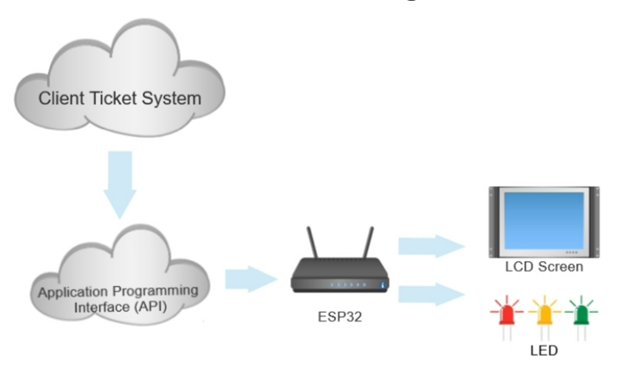
TechnipFMC is aiming to streamline their servicing process with the help of this group. Employees needed a way to confirm work orders, and to track specific parts, since an estimated 80 percent of an individual shift is spent walking between stations. The team developed a small, mobile device that can wirelessly connect to an API and receive information based on which equipment part it is assigned to, as well as indicate its current status.
Team members: Oscar Garcia, Millan Nguyen, Johnny Mai, Abiel H. Garza