UH Cullen College of Engineering
Texas Diesel Testing and Research Center Texas Diesel Testing and Research Center
Untitled Document

About

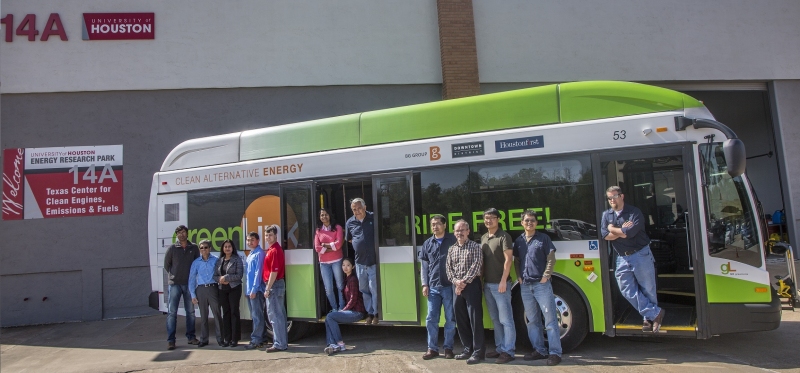
Cleaner emissions, renewable fuels and increased fuel economy for heavy duty diesel vehicles are being studied at the University of Houston Texas Diesel Testing and Research Center. We are a center of comprehensive research, development and testing of advanced powertrain and emission aftertreatment technologies for local, state and federal governments as well as the fuels, engine and aftertreatment industries.

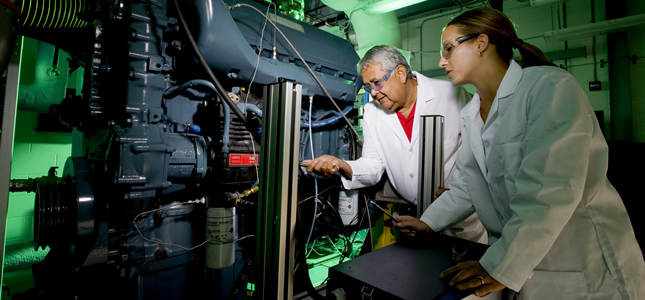
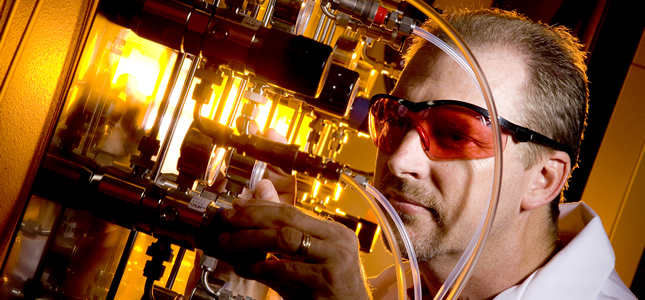
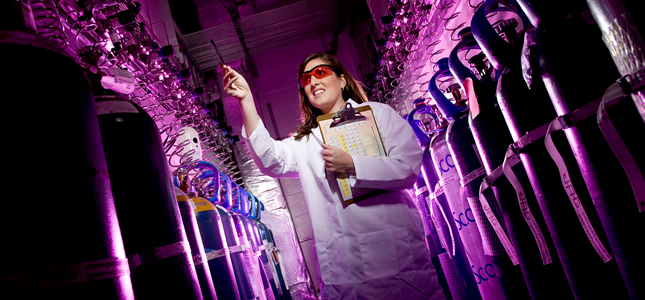
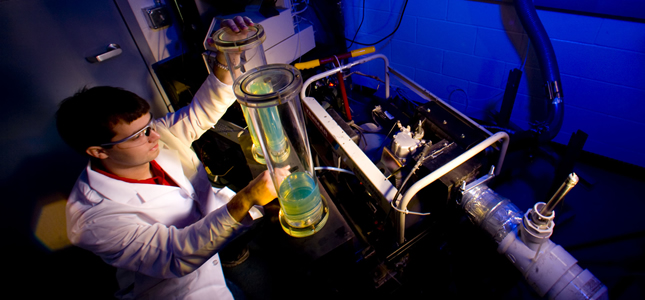
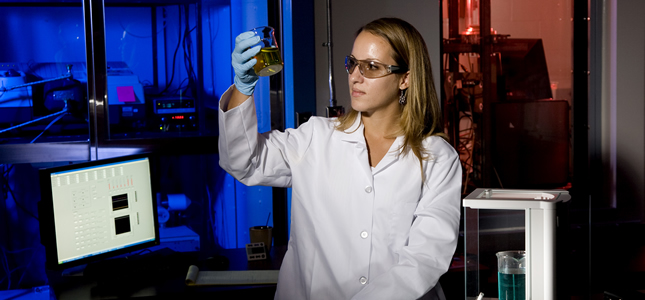
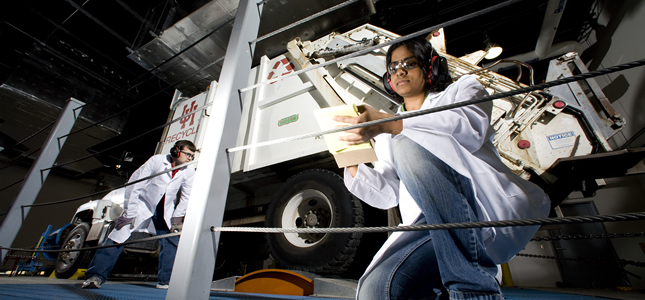
This center is staffed with engineers and researchers from the University of Houston Departments of Chemical and Biomolecular Engineering and Mechanical Engineering. The center has research capabilities spanning bench scale testing of emerging technologies to full scale testing of heavy duty diesel vehicles. The main components of the facility are a 500hp AC chassis dynamometer test cell, a 600 hp AC engine dynamometer test cell, a portable emissions measurement system, and a comprehensive research laboratory. The main focus of the testing activities is on retrofit technologies to decrease NOx and particulate matter (PM) emissions from on-road and off-road vehicles and equipment. The research activities focus on the reaction engineering of advanced catalytic aftertreatment technologies, synthetic fuels and additives, and biofuels in terms of emissions, fuel economy and sustainability.

We perform the following services:
    Pre-verification testing
    Technology screening
    Optimization of technologies
    Fundamental and applied research
    Concept development
    Technology demonstrations

History

The University of Houston Texas Diesel Testing and Research Center was started as a collaboration between the University and the City of Houston whereby the University would be responsible for doing independent testing of City of Houston heavy duty diesel vehicles equipped with various emission reduction technologies. The goal being for the City to get emission credits from un-verified technologies as well as determining the effectiveness of various technologies when applied to different vehicle types. Currently, the facility has evolved into a dynamic heavy-duty chassis dynamometer facility with expertise in a wide variety of testing methods, analysis and new technologies.


Untitled Document