UH Dept of Civil & Environmental Engineering
University of Houston Cullen College of Engineering
UH Home UH Engineering Home
Civil and Environmental Engineering
about academics research people resources
UH Dept of Civil & Environmental Engineering
 
Environmental Engineering Research

Overview
The six members of the Environmental Engineering Faculty are all active in research. The range of expertise of our faculty members covers the treatment of both soil and water using chemical and biological methods. We also have expertise in modeling and conducting risk assessment for both air, soil and water pollutants.

Facilities
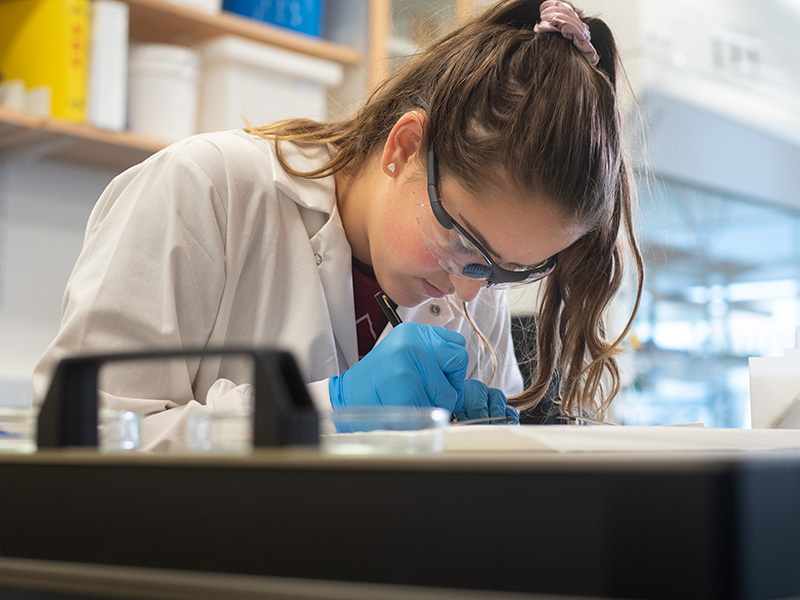
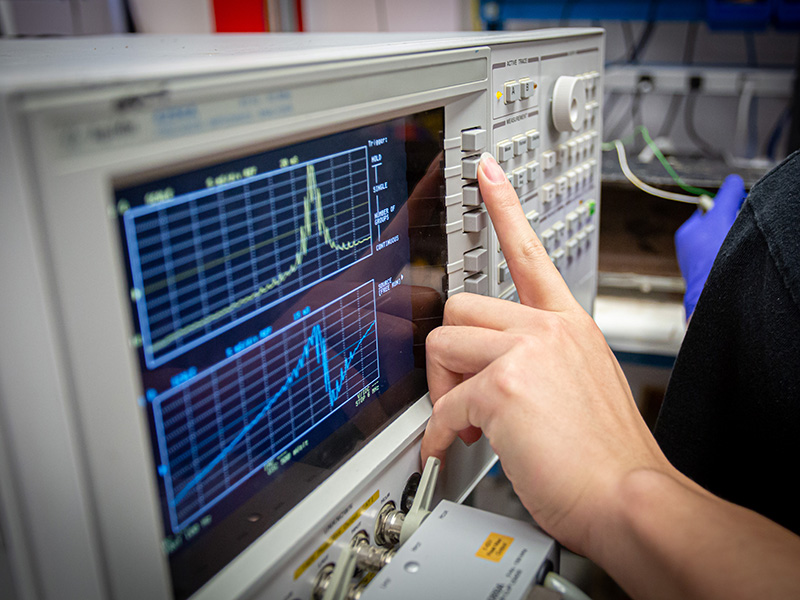
XuIn addition to personal laboratory space the students and faculty have access to a 2,000+ sq. foot analytical facility. The analytical laboratory is considered to be among the best equipped academic research laboratories in the world. The recent acquisition of $1 million worth of new equipment (including an HPLC/GC/MS as well as an ICP/MS) allows us to analyze almost all inorganic and organic compounds in water, air or soil.

The environmental engineering teaching laboratory is the location of the laboratories that are conducted as part of graduate classes in environmental chemistry, environmental microbiology, drinking water treatment, and biological treatment. This lab is also used for large scale graduate research such as the soil remediation pilot plant.

Examples of Specific Research Projects:

  • The Treatment of Perchlorate in Groundwater Using Ion-Exchange Technology.
    Montgomery Watson/AWWARF.
    D.A. Clifford and D.J. Roberts (2001-2003)
  • Biodegradation of Synthetic Drilling Mud Base Fluids in Gulf of Mexico Sediments.
    U.S. Department of Interior Minerals Management Service.
    D. Roberts and D. Herman (2001-2004)
  • Evaluating Source Grouting and ORC for Remediating MTBE Sites.
    Gulf Coast Hazardous Substance Research Center.
    H. Rifai, W. Rixey and D. Roberts (2000-2002)
  • In situ ion-exchange/biological removal of perchlorate from groundwater.
    Texas Higher Education Coordinating Board
    D. Roberts (2000-2002)
  • Closed Bottle Test for Determination of Degradability Of Drilling Mud Base Fluids.
    American Petroleum Industry.
    D. Roberts (1999-2002)
  • Regional Characteristics of Unit Hydrographs.
    Texas Department of Transportation.
    T. Cleveland (2000-2003)
  • Regional Characteristics of Storm Heyetographs.
    Texas Department of Transportation.
    T. Cleveland (2000-2003)
  • Internet and component-based modeling system for lake water quality and fish habitat projections.
    Texas Higher Education Coordinating Board / ATP.
    T.Cleveland (2000-2002)
  • Biosurfactant for Removal of Metals from Wastewater and Contaminated Soils.
    Gulf Coast Hazardous Substance Research Center (GCHSRC).
    C. Vipulanandan and K. Mohanthi
  • Characterizing the Intrinsic Remediation of MTBE at Field Sites.
    Gulf Coast Hazardous Substance Research Center.
    H.Rifai and W. Rixey. (2000-2003)
  • Transport, Fate and Risk Implications of Environmentally Acceptable Endpoint Decisions.
    Gulf Coast Hazardous Substance Research Center.
    H. Rifai and W. Rixey. (1999-2002)
  • Developing Portable Membrane Systems for Producing Drinking Water in Texas Border Areas.
    Texas Higher Education Coordinating Board — ATP.
    S. Chellam and D. Clifford. (2000-2002)
  • ICP-MS to Quantify Metals in Fine Particulate Matter in Houston.
    Texas Air Research Center.
    S. Chellam. (1999-2002) (Co-PI: Matthew Fraser, Rice University)
  • The Dissolution of Ethanol from NAPL Sources and the Impact on BTEX Groundwater Concentrations.
    American Petroleum Institute.
    W. Rixey. (2000-02)
  • An In Situ Catalytic Process for the Remediation of MTBE in Groundwater.
    Texas Higher Education Coodinating Board — ATP.
    (2000-02)
  • Developing a Guidance Manual for Modeling Natural Attenuation at Field Sistes.
    Air Force Center for Environmental Excellence.
    H. Rifai. (2000-2002)
  • Total Maximum daily Loads for Dioxins and Fecal Pathogens.
    Texas Natural Resources and Conservation Commission.
    H. Rifai. (2000-2003)
  • Developing an Integrated Methodology for Designing Long Term Monitoring Plans.
    Air Force Center for Environmental Excellence.
    H. Rifai. (2000-2002)
  • Nanofabrication and Performance Evaluation of a New Class of Membrane Filters for Water Purification.
    Texas Higher Education Coordinating Board — Advanced Research Program.
    Co-PI: Dr. Paul Ruchhoeft, UH Dept. Electrical and Computer Engineering (2002-2004)
  • Waste Reduction in Nanofiltration Facilities Employed to Prevent Pollution of Drinking Water by Halogenated Disinfection By-Products.
    Texas Hazardous Waste Reduction Center
    (2002-2004)
University of Houston Cullen College of Engineering
University of Houston State of Texas Privacy and Policies Compact with Texans Copyright Contact UH Feedback Site Map Homeland Security UH System Statewide Search